
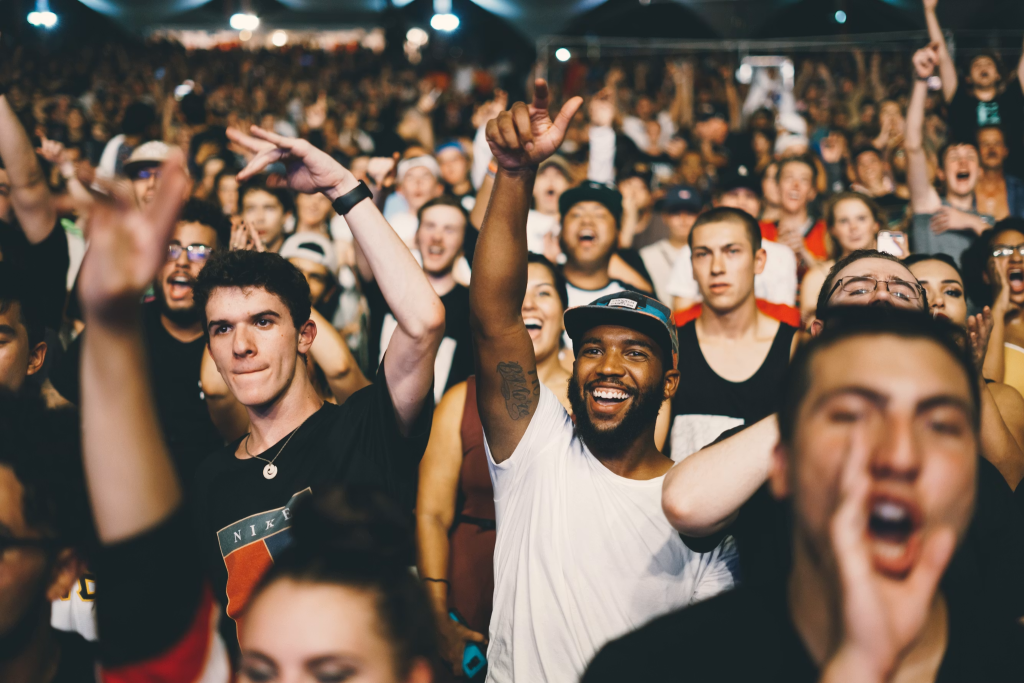
Walk into a football stadium in Dortmund or a beer tent in Munich during Oktoberfest, and something strange happens to first-time visitors. Thousands of voices lock onto the same beat, swaying in near-perfect unison, and the sound rolls through the crowd like a wave with its own gravity. Germans call it a kind of collective pulse – and once you have felt it, you understand why outsiders describe it as hypnotic rather than merely loud.
The phenomenon is not accidental. It draws on centuries of choral tradition, brass-band culture, and a national habit of turning shared moments into shared sound. Music researchers who study crowd behavior have compared it to rhythmic entrainment seen in ritual drumming, where a group’s heartbeat rate can measurably shift toward the tempo of the chant. For anyone curious about how structured, rule-based systems create predictable emotional payoffs – whether in music or elsewhere – the same logic appears in unrelated corners of leisure culture, including sites like sankra casino, where timing and repetition are engineered to produce a comparable sense of anticipation and release.
Where the Habit Comes From
Germany’s singing crowds did not appear overnight. Church choirs, workers’ singing clubs, and regional Volksfeste built a culture where communal singing was ordinary, not exceptional. By the 20th century, football terraces borrowed the same instinct, turning terrace chants into a kind of folk music performed live, every week, by tens of thousands of untrained voices.
Brass Bands and the Beer Tent Tradition
Oktoberfest tents rely on a specific formula: a live brass band, a conductor who reads the room, and songs everyone already knows by heart. The band does not just provide background noise – it actively drives when people stand, clap, and raise their glasses. That structure removes hesitation. Nobody has to decide when to join in because the rhythm decides for them.
Football Terraces as Rehearsal Space
Stadiums function differently but reach a similar result. Ultras groups rehearse chants before matches, distribute lyric sheets, and use capo-style leaders who face the crowd with their backs to the pitch. Repetition across ninety minutes turns a stadium into a rehearsal hall where thousands of strangers become, briefly, a single instrument.
The Psychology Behind the Sway
Researchers studying crowd synchrony point to a few overlapping mechanisms that explain why the effect feels so physical.
| Mechanism | What Happens | Why Newcomers Notice It |
| Rhythmic entrainment | Bodies unconsciously match tempo | Sway feels involuntary, almost automatic |
| Call and response | Leader initiates, crowd answers | Creates a loop that sustains itself |
| Shared expectation | Everyone knows what comes next | Removes social anxiety about joining in |
| Volume layering | Sound builds in waves, not a flat roar | Produces the “pulse” sensation visitors describe |
None of these elements require musical training. That is precisely the point – the system is built so that a tourist who does not speak German can pick up the clapping pattern within thirty seconds.
Why the Sound Feels Different to Outsiders
Visitors often say German crowd singing feels more organized than what they know from home, and there is a reason for that impression. The tempo tends to stay close to a walking pace, roughly 100 to 120 beats per minute, which matches natural human gait and heart rate variability during moderate excitement. Faster chants feel chaotic; slower ones feel like a dirge. Germany’s crowd traditions have converged, almost by trial and error over generations, on the tempo range that keeps the largest number of people locked in.
The Role of Tempo and Gait
Musicologists note that tempo choice is rarely conscious among crowd leaders, yet it consistently lands in the same narrow band across cities and decades. A conductor in a beer tent and a capo leading a stadium terrace have never met, but both settle on nearly identical pacing, suggesting the body itself is setting the boundaries of what feels natural to sustain for an hour. There is also a visual dimension. Arm-linking, the classic swaying line seen at Hamburg’s St. Pauli matches or during the “Ein Prosit” toast at Oktoberfest, gives newcomers a physical cue to follow even before they catch the words. Watching hands and shoulders move together is often what pulls a hesitant visitor into the chant.
What It Means Beyond the Stadium or Tent
Sociologists who study public gatherings argue that synchronized singing functions as a low-cost trust exercise. Strangers who move and sound alike, even briefly, report feeling safer and more connected to the people around them. That effect helps explain why German civic events – from Christmas markets to street festivals – lean so heavily on group singing rather than passive spectatorship. For newcomers, the lesson is less about music theory and more about permission. The rhythm tells you when to come in, the people beside you show you the words, and within a verse or two the hypnotic quality stops feeling foreign and starts feeling like something you were already part of.
